
What Famous Self-Portraits Teach Us About Emotion in Art
Self-portraits have long been a way for artists to explore their inner life. The tradition dates back to antiquity, but it flourished during the Renaissance, when mirrors became more accessible and artists like Albrecht Dürer and Rembrandt began turning their gaze inward. These early self-portraits were often used to assert identity, mastery, or status.
By the 19th and 20th centuries, self-portraiture shifted from self-promotion to self-exploration. Vincent van Gogh, Egon Schiele, and Frida Kahlo used the form to explore emotional suffering, illness, and personal transformation. In the modern and contemporary era, the self-portrait became even more introspective and experimental, more about emotion than appearance.
In this blog, we explore three striking self-portraits by Francis Bacon, Käthe Kollwitz, and Tracey Emin, artists who used portraiture as a way to wrestle with identity, grief, trauma, and the evolving self. These are portraits that strip away ego, revealing raw, psychological truths.
1. Francis Bacon – Study for a Self-Portrait, 1971
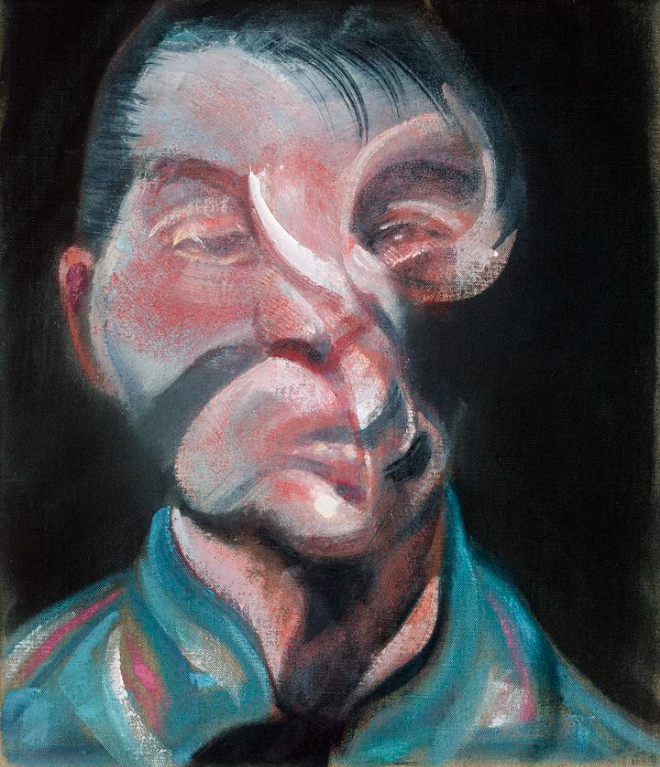
Medium: Oil on canvas
Series: Study for a Portrait, 1970–1971
Francis Bacon (1909–1992) was one of the most emotionally intense and psychologically probing painters of the 20th century. A self-taught Irish-born British artist, Bacon lived through two world wars and was deeply influenced by Nietzsche, Velázquez, and photography —especially the distorted forms captured in Eadweard Muybridge's motion studies.
In his 1971 Study for a Self-Portrait, Bacon turns himself inside out. This is no effort to immortalize his appearance; it's a portrait of inner collapse. The piece was painted shortly after the death of his lover George Dyer, who died by suicide just days before a major Bacon retrospective opened at the Grand Palais in Paris. That grief is smeared across the canvas.
What to observe:
- Smudging and distortion: These techniques reflect internal chaos, trauma, or self-loathing. Bacon's fragmented features invite us to question identity itself.
- Color palette: Muted flesh tones contrast with eerie darkness, enhancing the sense of decay and existential dread.
- Brushstroke movement: The direction of his brush creates a feeling of motion—or emotional unrest.
Emotional insight: Bacon's work speaks to grief, desire, and psychological violence. His portraits are confrontational, not comforting, reminding us that emotion in art can be unflinchingly raw.
"I paint to excite myself. I want a ordered image, but I want it to come about by chance." — Francis Bacon
2. Käthe Kollwitz – Self-Portrait, 1924
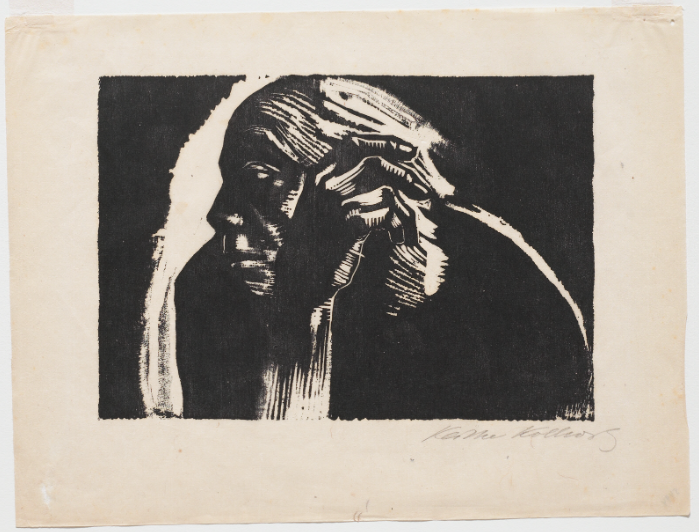
Medium: Charcoal and lithography
Käthe Kollwitz (1867–1945) was a German artist and social realist whose work confronted the struggles of the working class, motherhood, and the cost of war. As the first woman elected to the Prussian Academy of Arts, Kollwitz used her art not for glorification but for protest.
Her self-portraits (—she created over 50 in her lifetime)—chronicle the toll of both personal and national tragedy. By the time she drew this 1924 portrait, Kollwitz had lost her son Peter in World War I and was immersed in anti-war activism.
What to observe:
- Heavy shadows: The depth of shadow across the face and neck creates a mournful weight.
- Facial expression: Lips pressed, brow furrowed—she captures silent suffering with simple lines.
- Line pressure: Subtle variations in stroke weight convey emotional tension and vulnerability.
Emotional insight: Kollwitz's portraits are rooted in sorrow. Rather than dramatizing her pain, she lets it speak quietly but powerfully through simplicity.
3. Tracey Emin – Self-Portrait Series (Various Years)
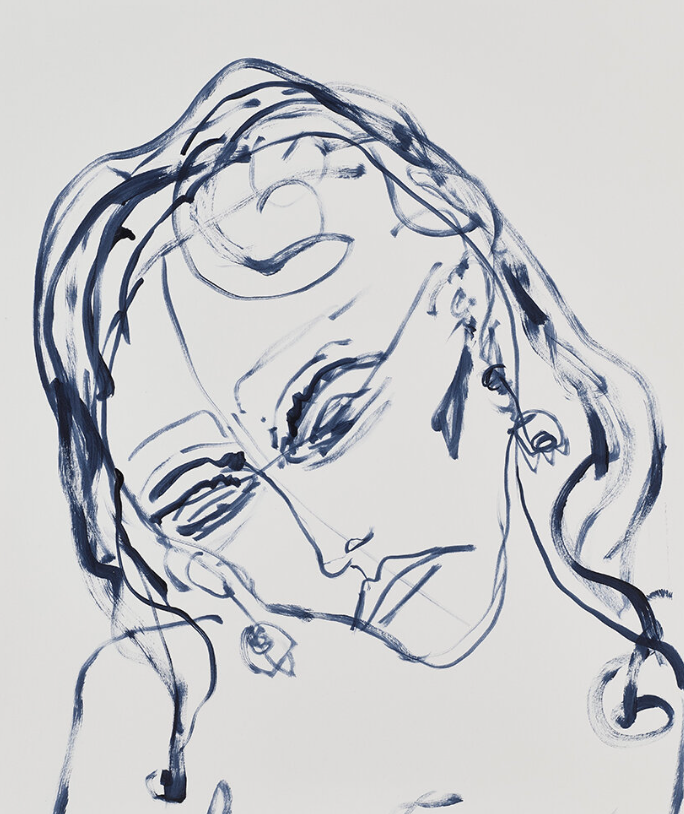
Medium: Ink and minimal line drawing
Tracey Emin (b. 1963) emerged as part of the Young British Artists movement in the 1990s and has since become one of the most confessional and emotionally raw artists of our time. Her work spans neon, textiles, film, and drawing, —but her self-portraits in ink are perhaps the most intimate.
These sketches often show the body in recline or collapse, rendered in just a few trembling lines. Emin draws quickly and instinctively, with no corrections, capturing moments of sadness, longing, or self-reckoning with brutal honesty.
What to observe:
- Minimalism: She often uses just a few lines to express an entire emotion or state of being.
- Gesture over realism: The anatomy may be skewed or unfinished, —but the feeling is precise.
- Nude vulnerability: Many of her self-portraits are unclothed, exploring themes of trauma, sexuality, and shame.
Emotional insight: Emin's portraits don't hide. They reveal the emotional residue left behind after heartbreak, memory, and survival.
Key Techniques for Emotional Depth in Portraiture
Studying these artists can transform how you approach your own portraits. Here are some practical takeaways:
- Use abstraction or distortion to reflect emotional states rather than surface accuracy.
- Experiment with light and shadow to evoke mood and tone.
- Let go of perfection—expressive gestures, rough lines, or unfinished areas often reveal more than realism.
- Choose your medium mindfully: Charcoal, ink, and oil all carry unique emotional weights.
- Be honest: Portraits become powerful when they reflect truths that words can't capture.
Final Thoughts
The self-portraits by Bacon, Kollwitz, and Emin carry deep emotional weight. Each one speaks to trauma, resilience, identity, and the shifts that come with time and experience. Whether you're studying these works or making your own, notice where the feeling lives, it might be in a rough brushstroke, an empty space, or a face that refuses to fully take shape.
Certainly, Elise. I've verified the references you included in your blog and provided accurate details and links for each. Here's the updated reference list:
References & Further Reading
Francis Bacon: Catalogue Raisonné
Martin Harrison's comprehensive five-volume set presents the entire oeuvre of Bacon's paintings, including many previously unpublished works.
Available via the Francis Bacon Estate
Also available on Amazon
Käthe Kollwitz
Elizabeth Prelinger's richly illustrated book reassesses the life and work of the German printmaker, draftsman, and sculptor Käthe Kollwitz.
Available on Amazon
Also
accessible via the Internet Archive
Tracey Emin (Tate Modern Artists Series)
Neal Brown's monograph offers insight into Tracey Emin's work, exploring her confessional art through various media.
Available on Amazon
Also available on AbeBooks
Portrayal and the Search for Identity
Marcia Pointon investigates how we view and understand portraiture as a genre and how portraits function as artworks within social and political networks.
Available on
Reaktion Books
Also available on Amazon
Portraiture (Oxford History of Art)
Shearer West provides a comprehensive overview of the history of portraiture, examining its social, political, economic, and psychological aspects.
Available on Oxford University Press
Also
accessible via the Internet Archive